Sewing Machines
A reliable sewing machine is your best friend. For doll making, you don’t need a high-end machine; a basic model with a straight stitch and zigzag stitch is perfectly fine.
My current sewing machine that I enjoy using very much is the Juki HZG-G120, this is the G220: https://tinyurl.com/33p2yfbj
If you prefer a less advanced machine that fits your budget, I can recommend this Brother machine: https://tinyurl.com/2s3jtxpc. I used to sew hundreds of dolls and their clothes on a machine like this one and it served me really well.
Tools
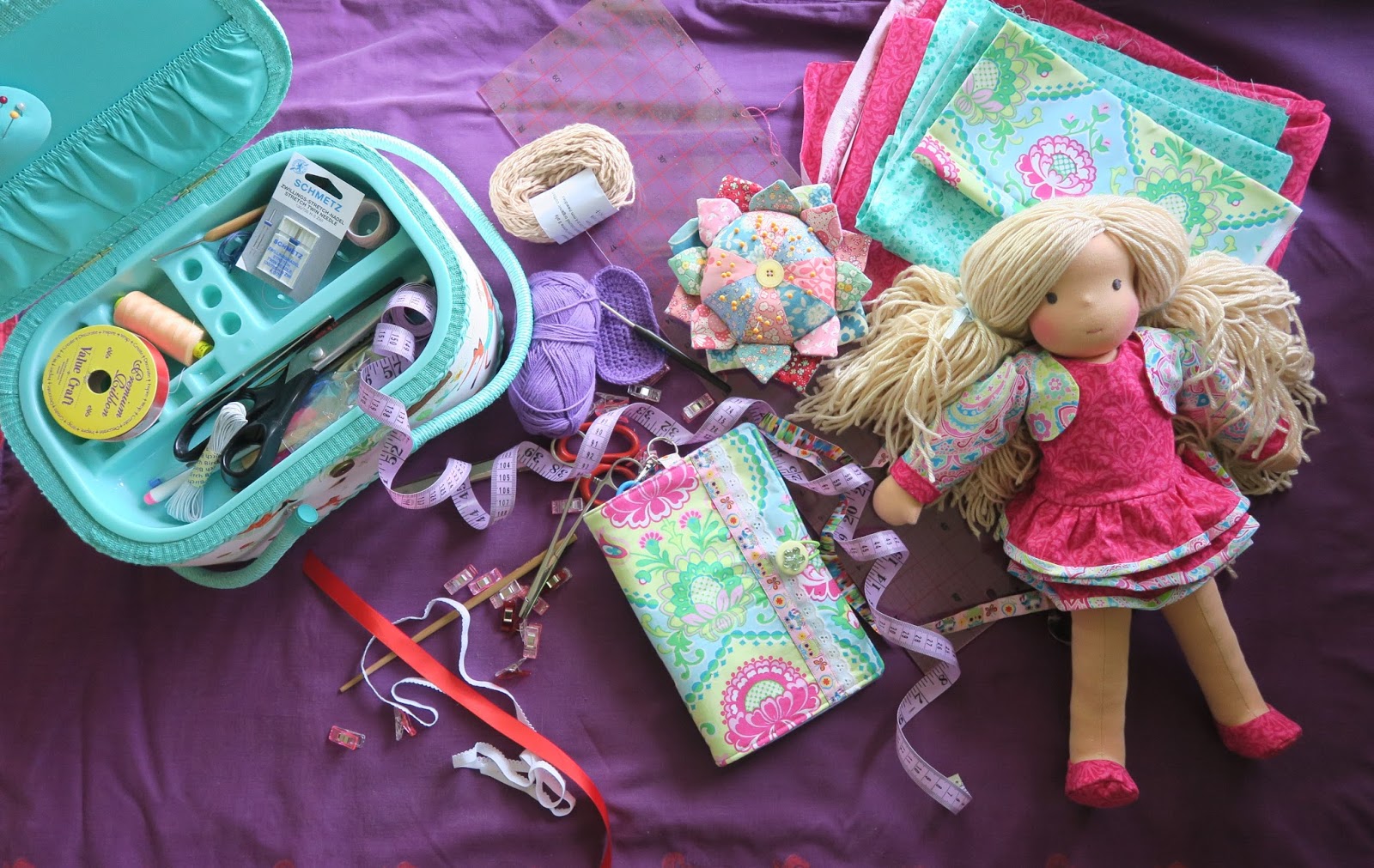
Here is a list of all the tools I use that make my life as a dollmaker a lot easier.
If you want to watch a video where I explain which tool I use for what, have a look here:

Sewing Needles: https://tinyurl.com/bddw9txw
Beading Needles: https://tinyurl.com/2p8c2kb6
Doll Making Needles: https://tinyurl.com/yx4rjpuu
Wool Needles: https://tinyurl.com/2d76pxjt
Sewing Pins: https://tinyurl.com/4m3bf5kf
Hemostat: https://tinyurl.com/ya2nvzkw
Bodkin: https://tinyurl.com/37eu5rje
Turning Tool: https://tinyurl.com/59jc7rba
Rotary Cutter: https://tinyurl.com/e52vunc7
Fabric Scissors: https://tinyurl.com/m9zhknk
Cutting Mat: https://tinyurl.com/579akbzk
Bamboo Chop Sticks as stuffing tools: https://tinyurl.com/mrxbfb3j
Air Erasable Fabric Marker: https://tinyurl.com/ya7tr54u
Fabrics
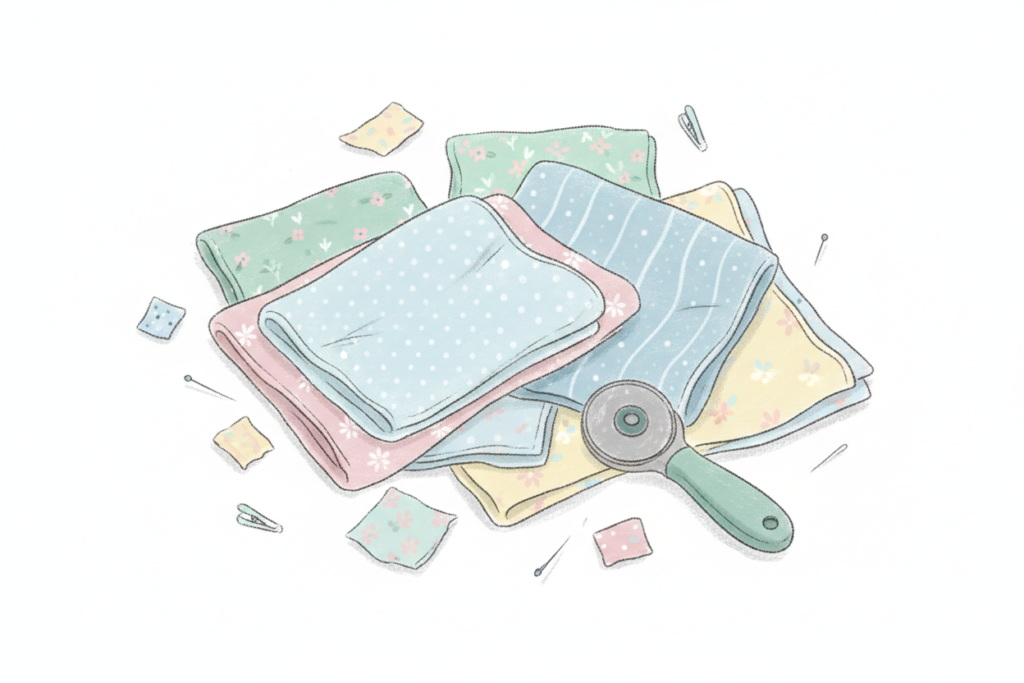
Once I start browsing for fabrics, whether online or at a brick and mortar store, I lose track of time. It’s just such a joy to look at all these colour combinations, patterns and imagine all the projects I can make from them.
I am linking some of my favourite products here:
Floral Fabrics: https://tinyurl.com/5y6vpaxj
Kaffe Fasset: https://tinyurl.com/4tpfeukh
Fabric Bundle: https://tinyurl.com/27fc73xp
Fabric Bundle Pink: https://tinyurl.com/4z6cdt29
Fat Quarter Bundle: https://tinyurl.com/mr3556j9
Doll Skin
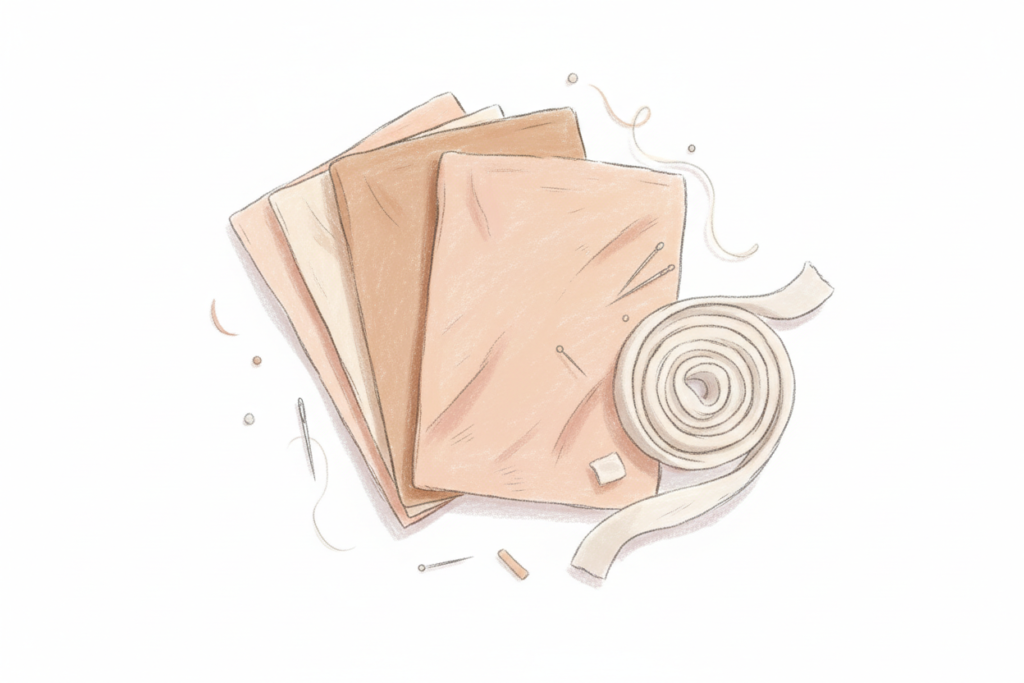
I mainly use De Witte Engel Doll tricot for my dolls. I also use Laib Yala every now and then. De Witte Engel fabric is a lot softer and snugglier and Laib Yala is very sturdy and does not pill. De Witte Engel is stretchier, so you might need to change the doll template if you use Laib Yala fabric, otherwise the dolls come out skinnier and the clothing patterns might have to be adjusted.
For the head I am using tubular bandage or stockinette. The width depends on the size of the doll’s head and is included in the PDF patterns.
USA:
Doll Skin Fabric: https://tinyurl.com/ms4hnj9k
Tubing to make the doll head:
for 8″ dolls: https://tinyurl.com/bddt4ew3
for 10″-12″ dolls: https://tinyurl.com/4a7vcphe
for 15″-20″ dolls: https://tinyurl.com/4a5xtbv7
Europe:
De Witte Engel: www.dewitteengel.nl
Waldorf Doll Supplies: www.waldorfdolls.co.uk
Laib Yala: www.laib-yala.ch
Australia:
Winterwood Toys: https://bit.ly/2kJ4o5g
Stuffing
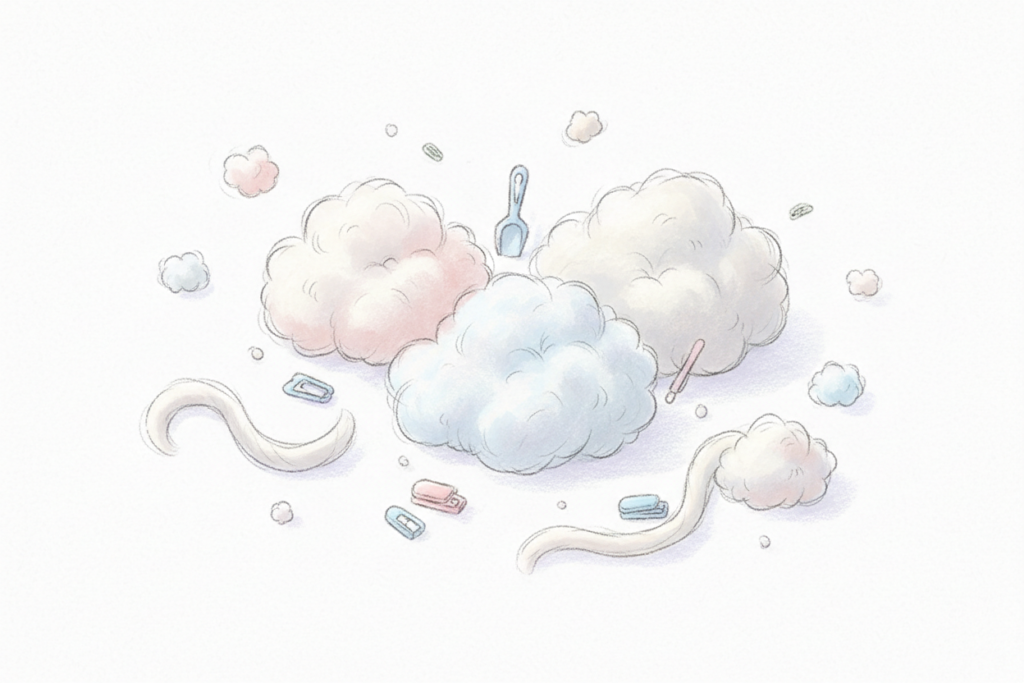
The traditional method for stuffing Waldorf and Waldorf inspired dolls is sheep’s wool. There are many suppliers online. I now am using plant fibers like corn, eucalyptus, cotton, kapok and soy only and will therefore link those below.
USA:
Corn Fiber Fill: https://tinyurl.com/5bh728aa
Mountain Mist Fiber Fill: https://tinyurl.com/nhaka5b4
Poly Pellets Weighted Stuffing Beads: https://tinyurl.com/2jcczjj5
Europe:
https://bit.ly/2kIu4mD
Australia:
https://ecofillingaustralia.com.au/eucalyptus-fibre-less-than-1-kg/ (my favourite)
https://ecofillingaustralia.com.au/corn-fibre-1-kg-or-more/
https://www.innergreen.com.au/product/corn-toy-fill/
Thread
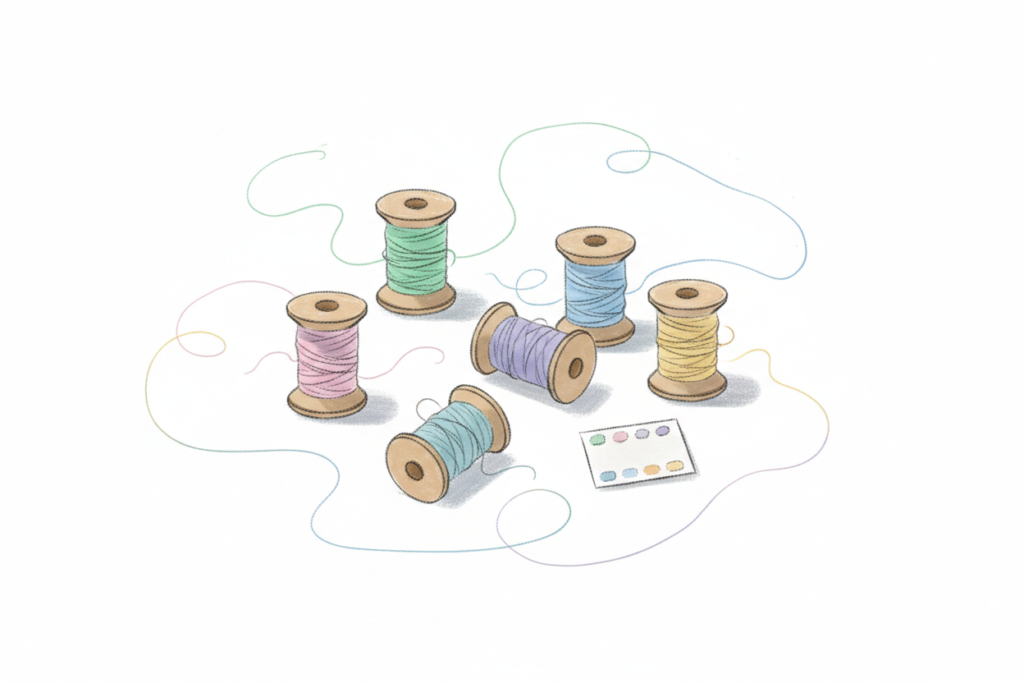
My favourite threads are made by Gütermann: https://tinyurl.com/d9yvhdru
I also hear that Mettler and Nylbond are great for sewing doll skin. I am using the Universal Polyester Thread by Gütermann and the Mara 100 thread. They have matching threads for all the different doll skin colours.
I am using the following threads for the following De Witte Engel doll skin fabrics:
- DWE Colour T101 (light pink) and T102 (salmon) or Laib Yala 320 – Gütermann Colour 659 or 165
- DWE Colour T115 (sunkissed) and T103 (peach) or Laib Yala 4355 and 211 – Gütermann Colour 06 or 979
- DWE Colour T116 or Laib Yala 4323 (beige) – Gütermann Colour 722
- DWE Colour T105 or Laib Yala 155 (moccha, light brown) – Gütermann Colour 591 or 139
- DWE Colour T106 or Laib Yala 1230 (red brown) – Gütermann Colour 448
- DWE Colour T104 or Laib Yala 1228 (dark brown) – Gütermann Colour 446 or 816
You can purchase the Gütermann threads at your local craft store or here:
https://tinyurl.com/d9yvhdru
https://www.waldorfdolls.co.uk/doll-making-supplies/sewing-threads/gutermann-skin-thread.html?p=1
https://www.wawak.com/MARA120-1000M-COL-000
Doll Hair
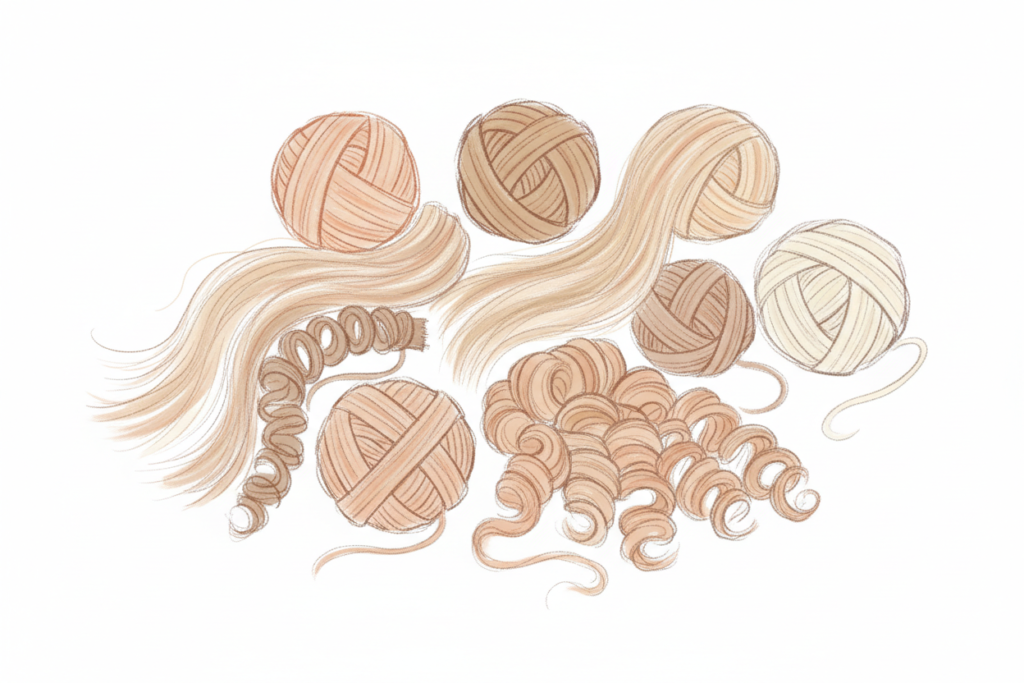
I mainly use yarn for the doll’s hair, sometimes I use wefts too. There are a variety of yarns and wefts available, I mainly use cotton, bamboo, acrylic yarn and synthetic wefts.
USA:
Cotton: https://tinyurl.com/5djpcmb3
Bamboo/Cotton: https://tinyurl.com/yp6xnxra
Banana Silk: https://tinyurl.com/58aac8pj
Bouclé: https://tinyurl.com/yu4fjj96
Wefts:
Wefts Curly: https://tinyurl.com/26ezfyhw
Wefts Curly in multiple colours: https://tinyurl.com/2p9pnbxj
Wefts wavy: https://tinyurl.com/yrc94ryz
Wefts straight: https://tinyurl.com/yc4a85p9
Europe:
Cotton Yarn: https://tinyurl.com/3p8ju8hv
Banana Silk: https://tinyurl.com/5hcysd6f
Recycled Fiber: https://tinyurl.com/c3pryeh4
Artisanal Yarn: https://tinyurl.com/w777c7h4
Australia:
https://ecoyarns.com.au
Blush
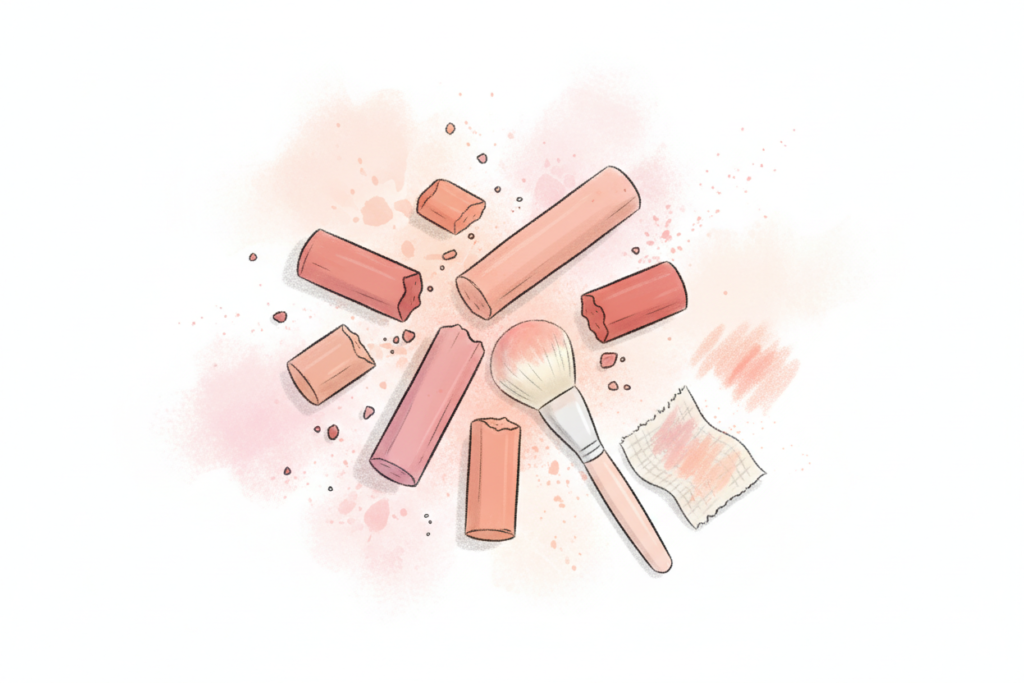
The traditional method is to use Stockmar wax crayons and blocks, draw on a scrap piece of fabric and gently rub the colour on the fabric onto the doll’s cheek in a circular motion.
I am using plant-based wax crayons by Melissa and Doug.
Crayons Melissa and Doug: https://tinyurl.com/tum97643
Soy Wax Crayons: https://tinyurl.com/23jykwb4
Notions
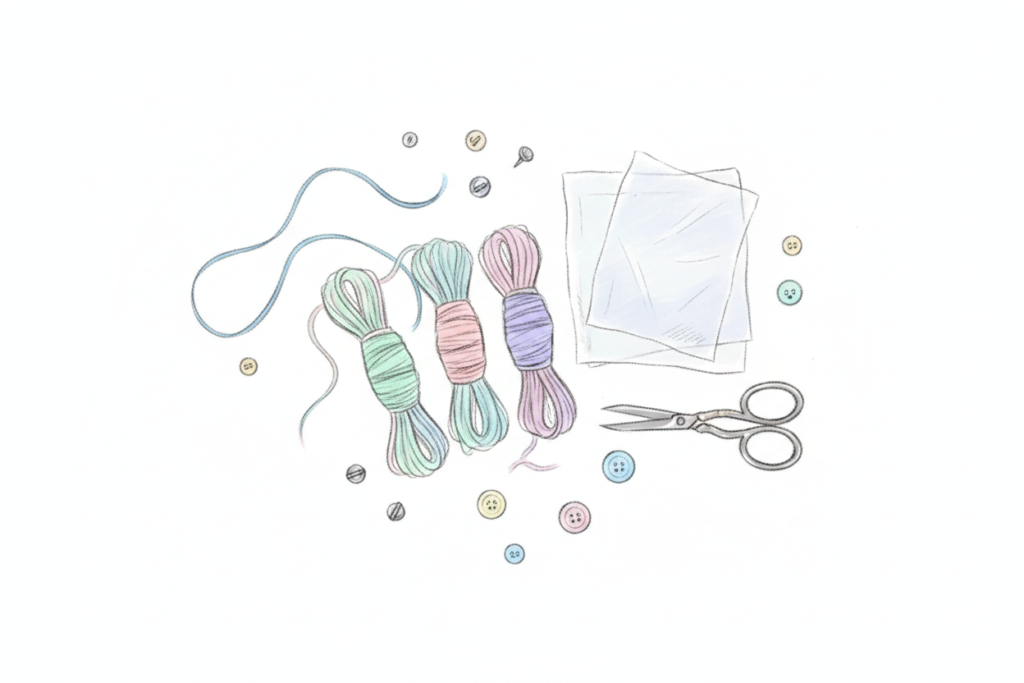
String to tie the head
I am mostly using mercerized thick cotton string or any other string that does not break when I pull it as hard (or almost as hard) as I can. Here are some examples:
USA:
Mercerized Cotton White: https://tinyurl.com/5n6wbt9s
Mercerized Cotton Mix: https://tinyurl.com/yp26whx9
Weir Crafts: https://bit.ly/2juEHV5
Europe:
https://tinyurl.com/46eaxsyh
Australia:
https://bit.ly/2kLgY40
Embroidery Floss (eyes and mouth)
I am using DMC embroidery floss, but you can use any 6 stranded embroidery floss.
Pink Embroidery Floss: https://tinyurl.com/37huefa4
Blue Embroidery Floss: https://tinyurl.com/bdfr8h6c
Brown Embroidery Floss: https://tinyurl.com/36tn3zkv
Green Embroidery Floss: https://tinyurl.com/2axfe349
Interfacing
Interfacing is used to stabilize fabrics to create long lasting and durable projects. There are plenty of different interfacing types: Fusible, Sew In, Woven, Non Woven and Knit. I mainly use fusible one in my projects, as it is easy to use and convenient.
Interfacing also comes in different weights. From very thin and light, to medium and extra thick and padded.
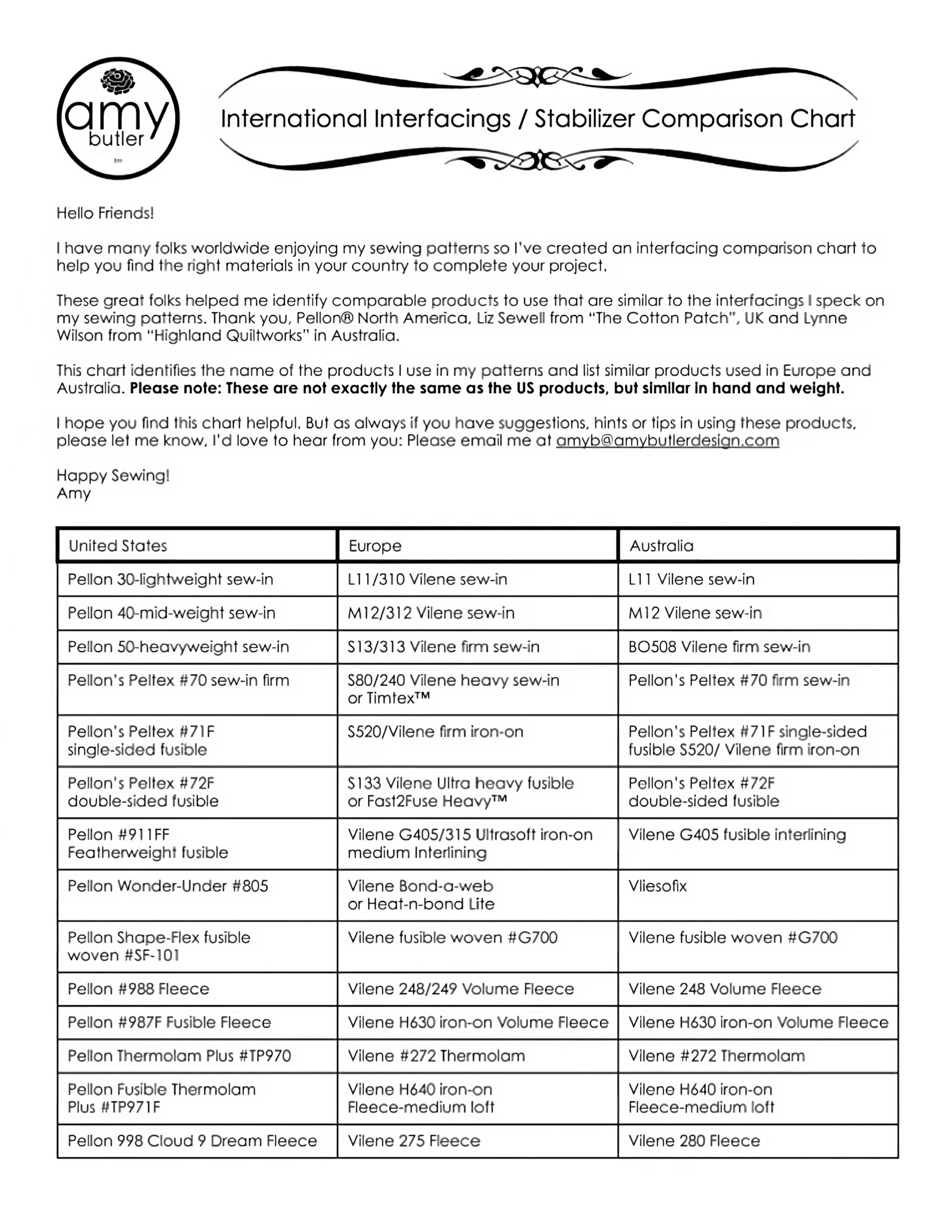
Here is a handy guide by Amy Butler listing several types and weights of interfacing:
http://www.amybutlerdesign.com/pdfs/InterfacingChart.pdf
And here is a guide by Pellon: https://bit.ly/2kKNcgG
And a guide by Joann’s: https://bit.ly/2kc7sYJ
And here are several products by Pelall the Pellon products listed: http://www.pellonprojects.com/products-categories/interfacing/
For most of my projects I am using either lightweight, medium or heavyweight interfacing like these:
Light weight interfacing: https://tinyurl.com/3jhjs6e3
and another option: https://tinyurl.com/28kpdmd7
Medium weight interfacing: https://tinyurl.com/28fevp9m
Heavy weight interfacing: https://tinyurl.com/57j5zxtj